
113/2010
Collection
Ceramics
Brief description
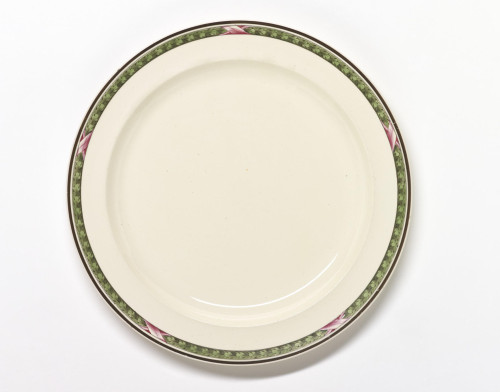
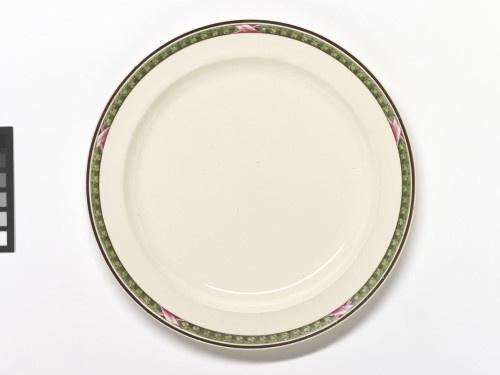
Creamware plate decorated with a painted enamel border of oak leaves and crossed bands, in sepia brown, green and pink. Manufactured by Wedgwood in England, c.1770s.
Title
Berlin Oak
Object name
plate
Object number
113/2010
Production organisation
Josiah Wedgwood and Sons Ltd (manufacturer)
Production date
c.1770s (manufactured)
Production place
Etruria (manufactured)
Period
Georgian (1714-1837)
Material
earthenware
lead glaze
enamel
lead glaze
enamel
Technique
glazed
painted
painted
Physical description
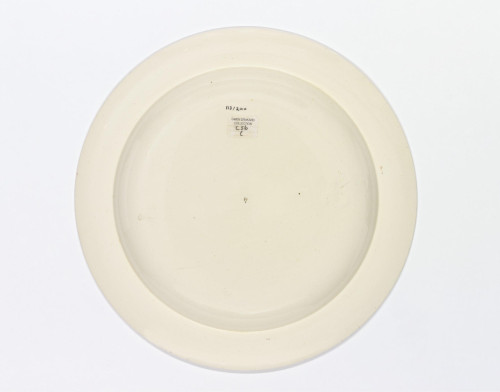
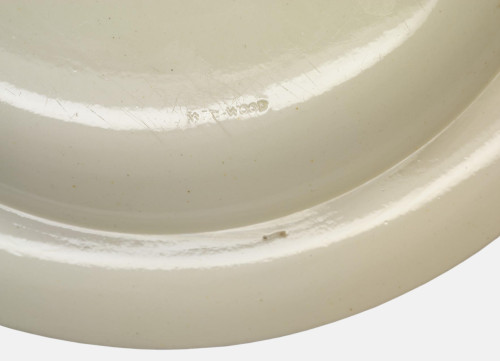
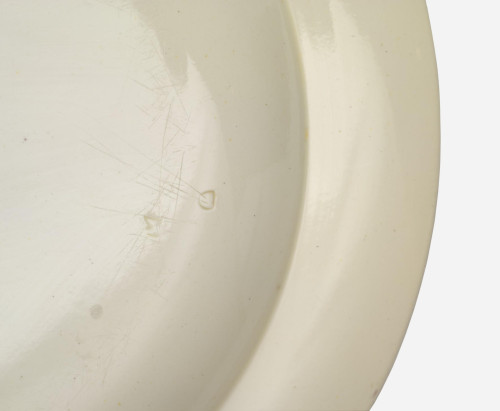
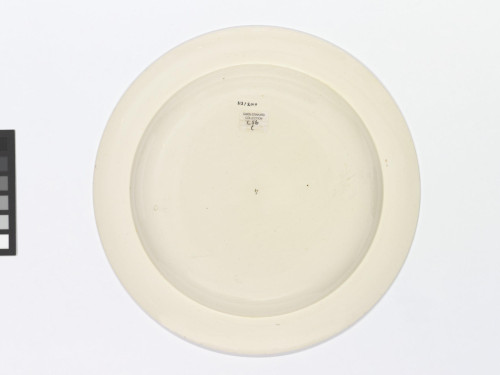
Creamware plate with a plain rim, outlined in brown, with an inner running enamel border set between two sepia brown lines of oak leaves, the edges and veins of the leaves painted in sepia brown and filled in green. The band of leaves is interrupted by five crossed bands painted in pink. The reverse of the plate has an impressed upper-case Wedgwood mark, the letters D and M impressed, and the figure 4 painted in sepia brown. There are small surface scratches follwing the pattern of wear on the reverse. There is a paper sticker adhered to the reverse with the printed text "Gwen Drakard Collection".
Dimensions
Diameter: 25.2cm
Height: 2cm
Height: 2cm
Website keywords
serving food
Label
Label text for ‘Keeping House’ case, Information Bay 1, Geffrye Museum, object added to display July 2011:
Creamware dinner plates, about 1780-95
Earthenware, Wedgwood, Etruria, Staffordshire
Creamware was made using flint in the clay body, creating a ceramic that was more hardwearing than other glazed earthenwares. It was as hard as porcelain and could be decorated with a variety of patterns making it more expensive the more elaborate the pattern became. Large quantities of creamware were produced by Wedgwood and other Staffordshire potteries making it affordable for middling consumers, providing an alternative to the use of pewter for dining.
Creamware dinner plates, about 1780-95
Earthenware, Wedgwood, Etruria, Staffordshire
Creamware was made using flint in the clay body, creating a ceramic that was more hardwearing than other glazed earthenwares. It was as hard as porcelain and could be decorated with a variety of patterns making it more expensive the more elaborate the pattern became. Large quantities of creamware were produced by Wedgwood and other Staffordshire potteries making it affordable for middling consumers, providing an alternative to the use of pewter for dining.
-
© Museum of the Home, London
-
© Museum of the Home, London
-
© Museum of the Home, London
-
© Museum of the Home, London
-
© Museum of the Home, London
-
© Museum of the Home, London
-
© Museum of the Home, London


