
86/2000-2
Collection
Brief description
Object name
Object number
Production organisation
Production date
Production place
Manchester (made)
Period
Material
leather
canvas
Technique
printed
woven
glued
Physical description
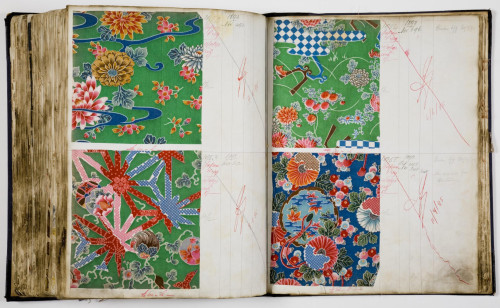
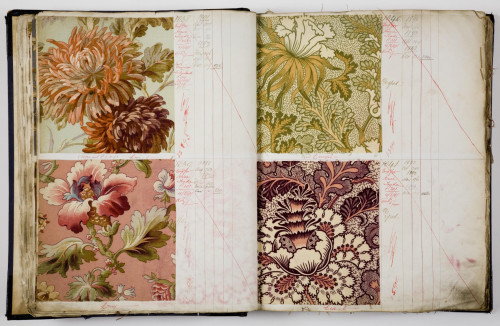
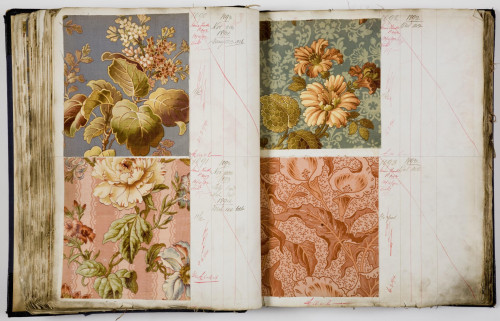
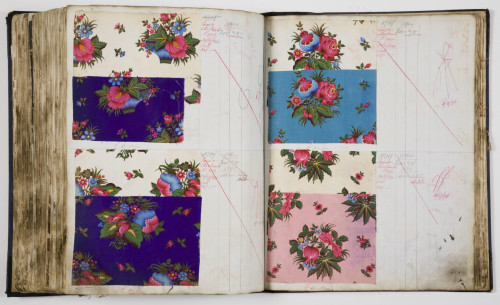
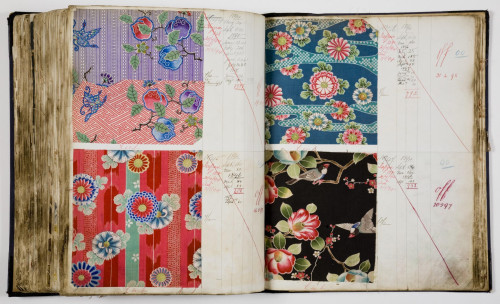
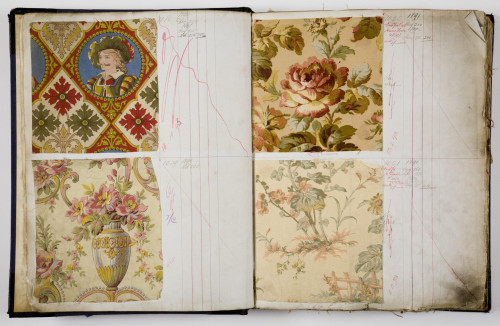
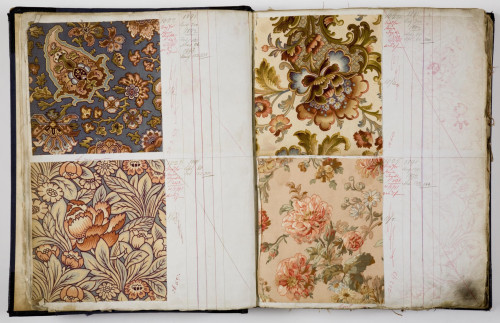
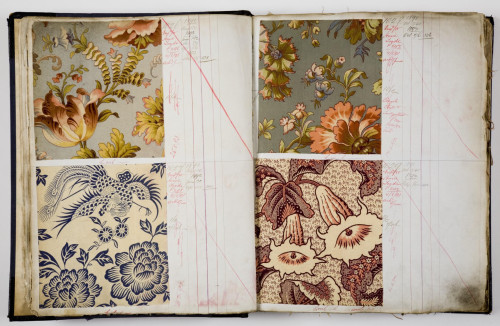
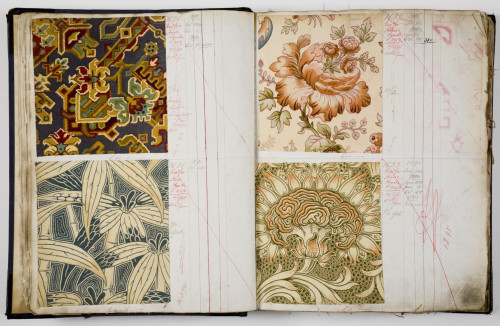
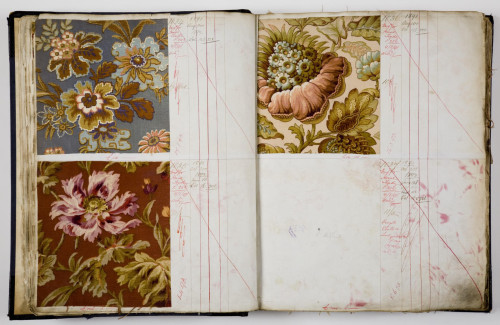
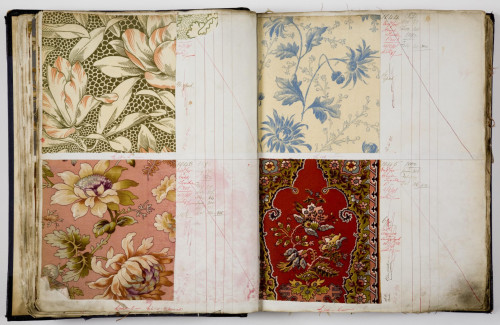
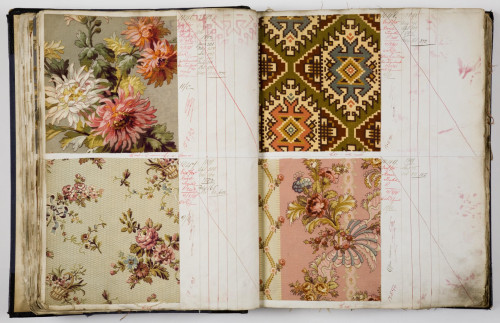
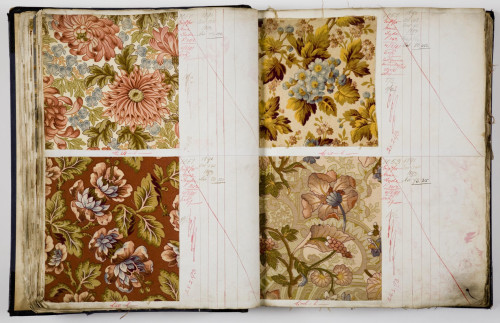
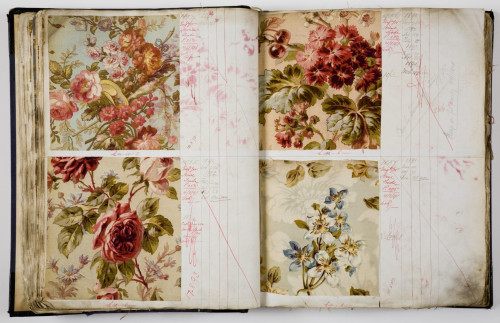
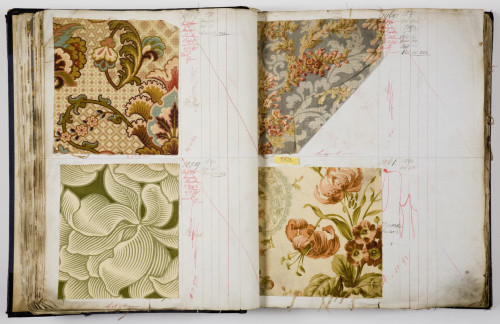
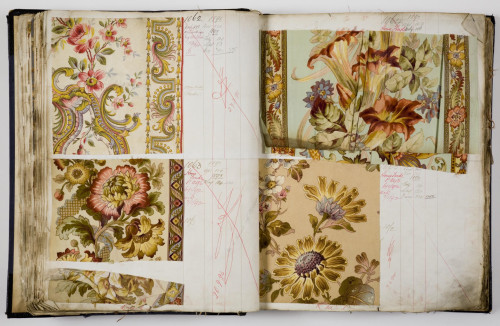
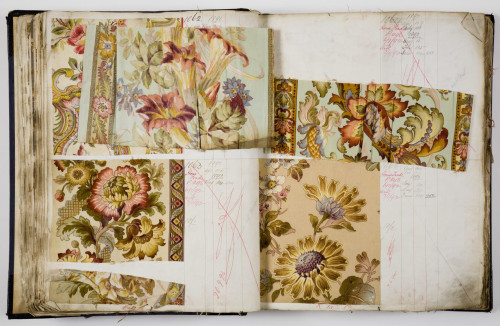
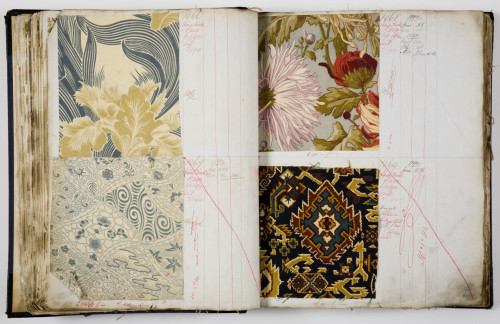
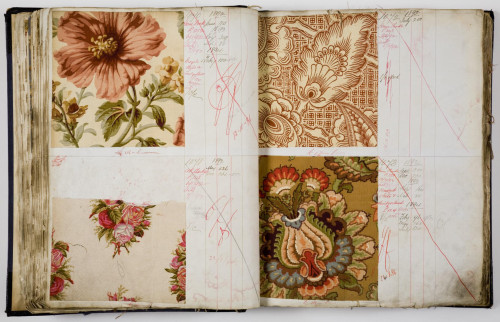
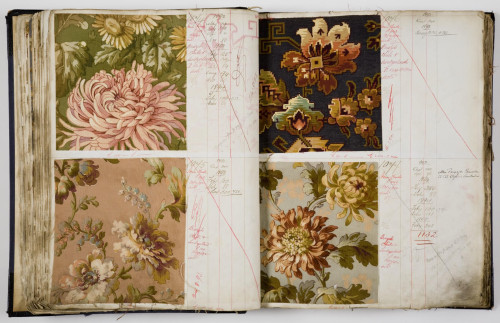
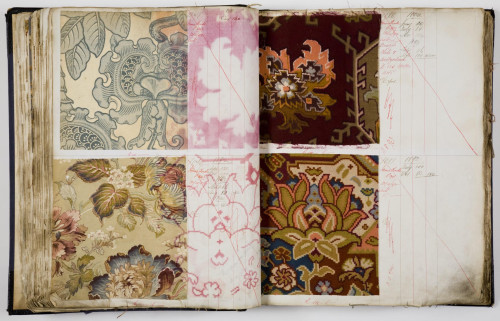
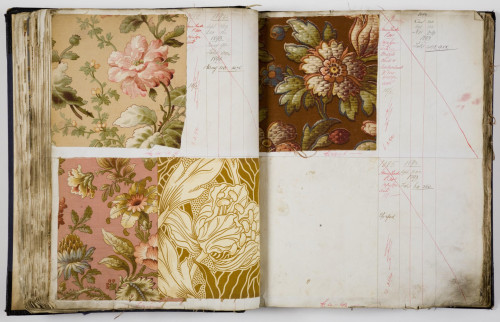
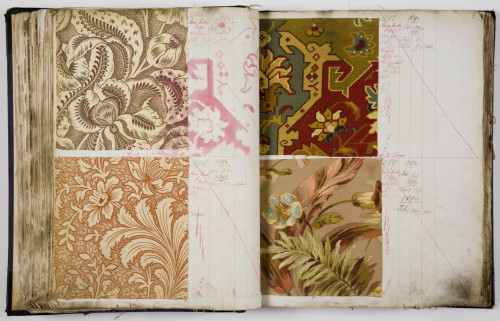
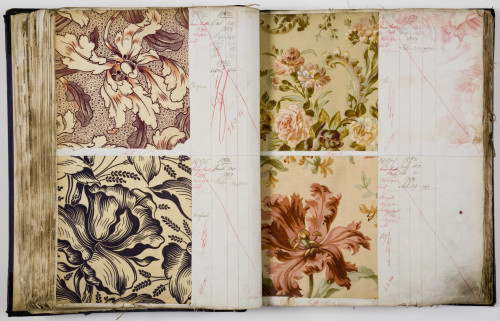
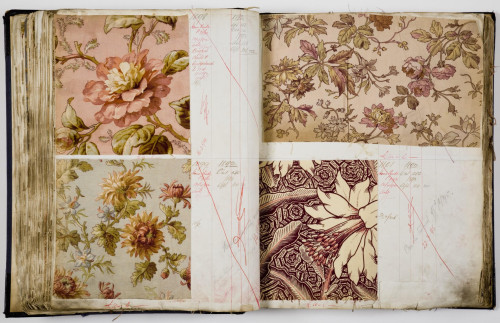
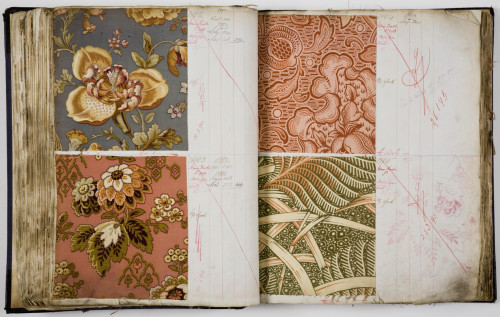
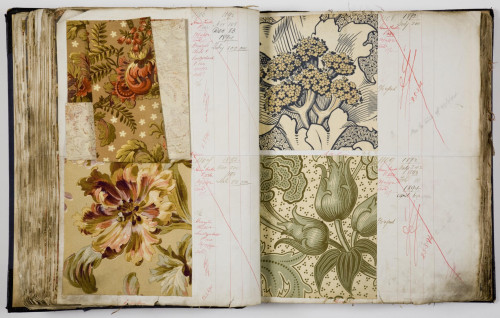
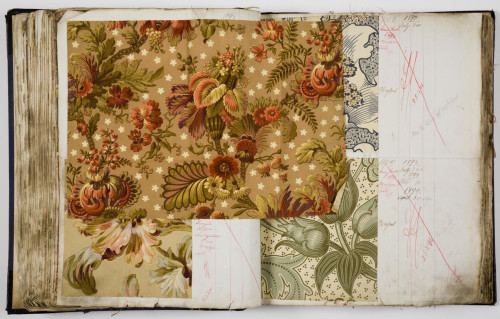
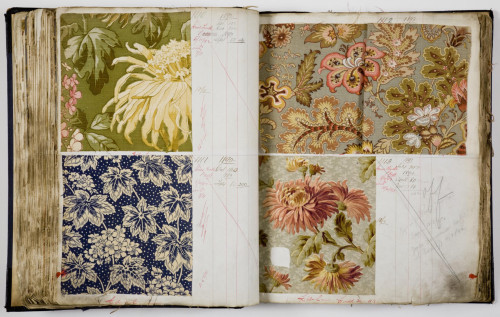
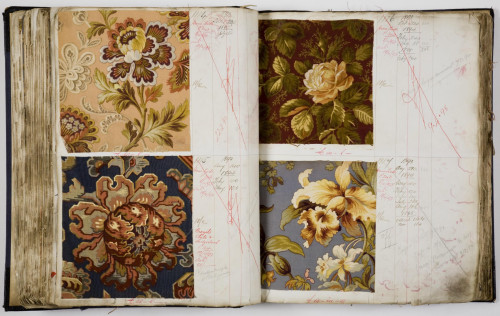
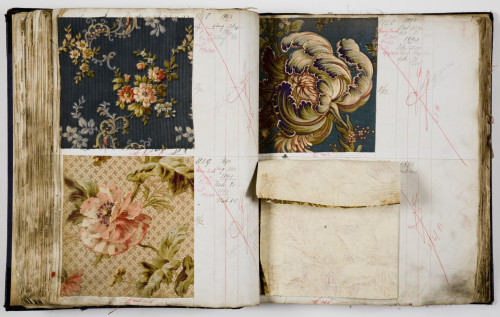
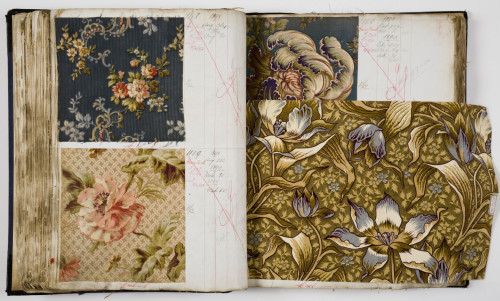
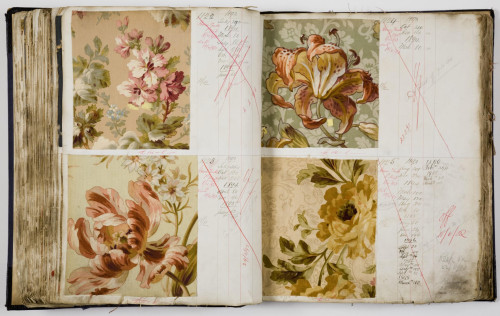
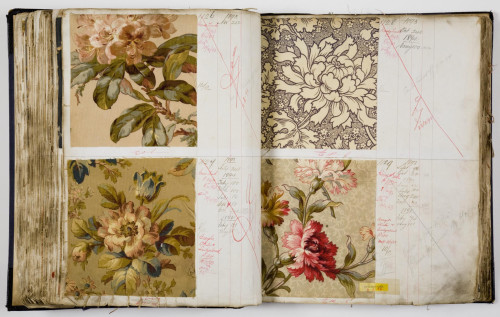
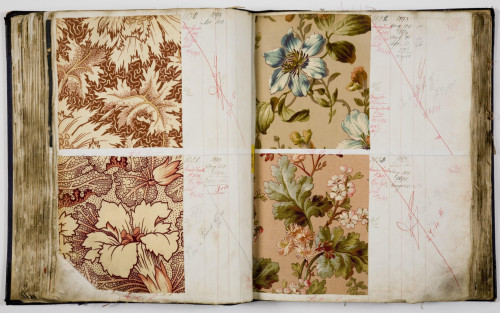
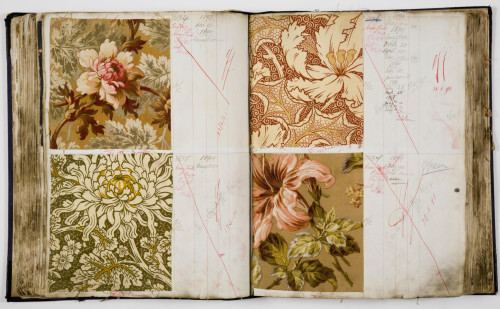
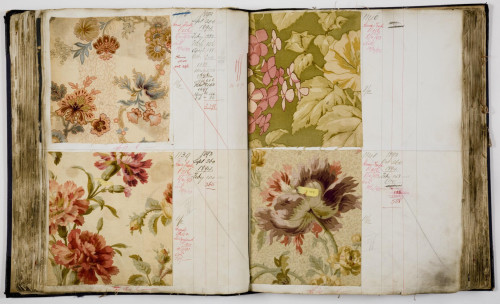
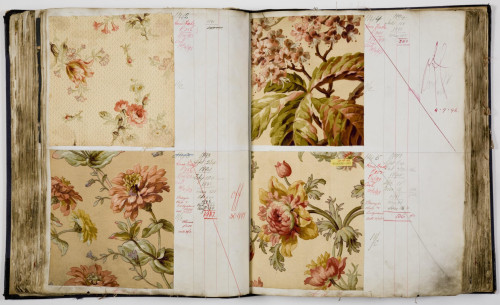
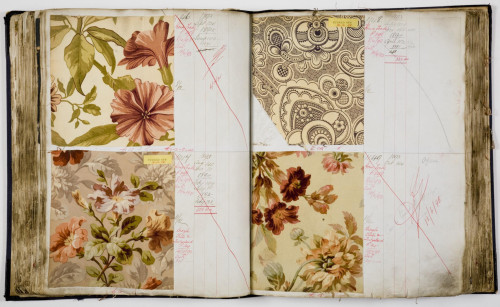
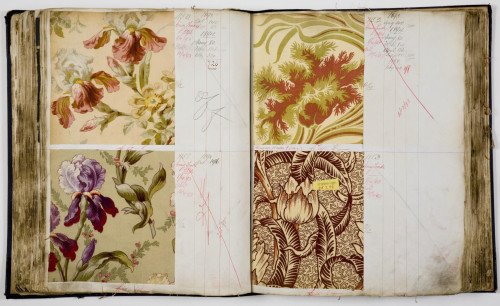
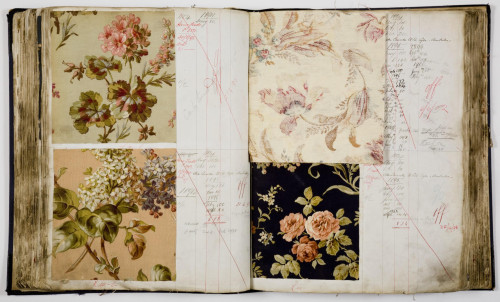
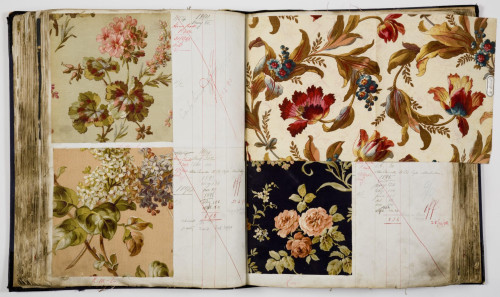
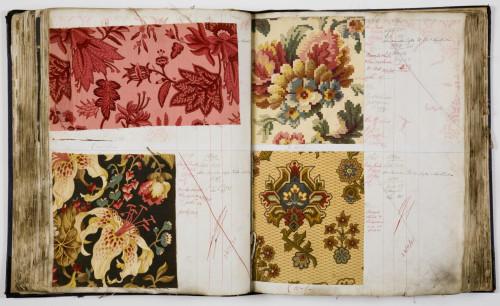
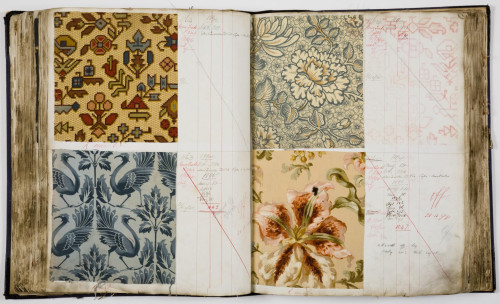
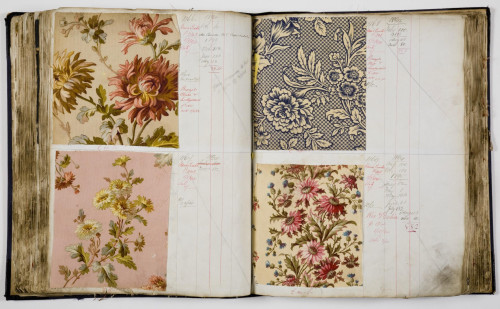
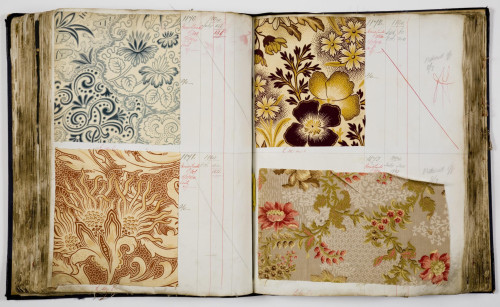
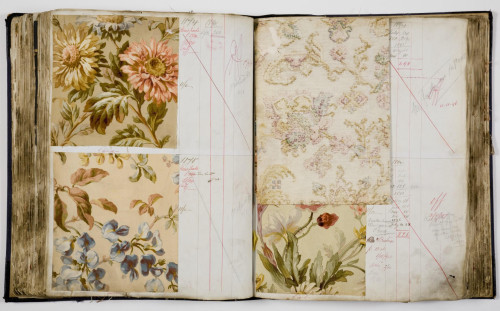
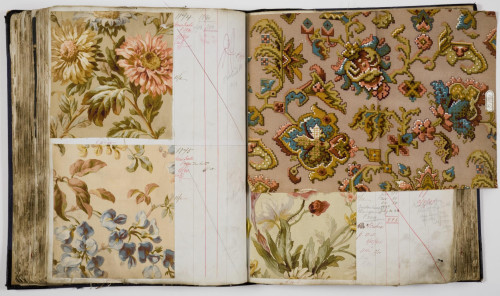
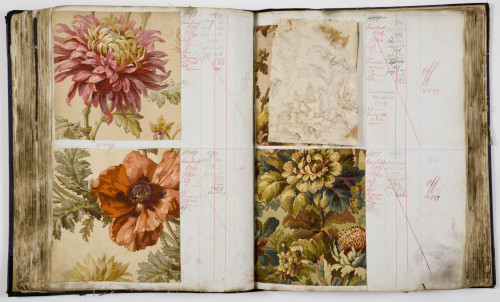
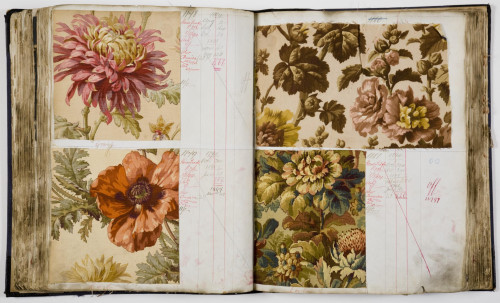
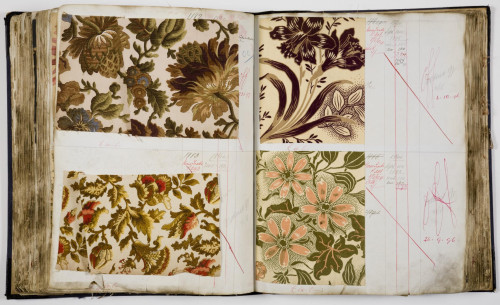
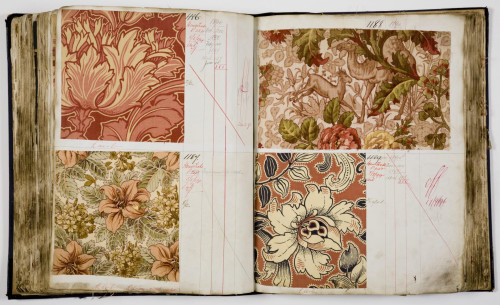
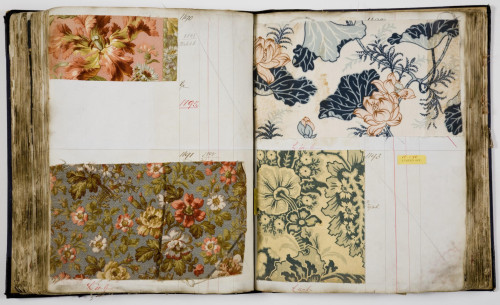
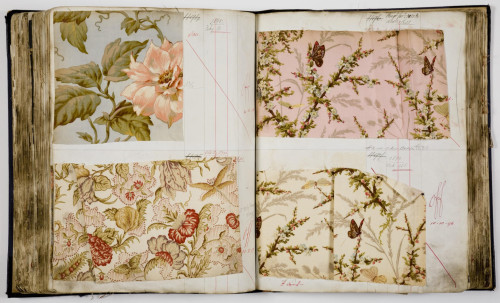
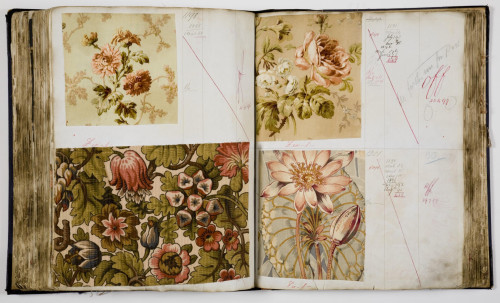
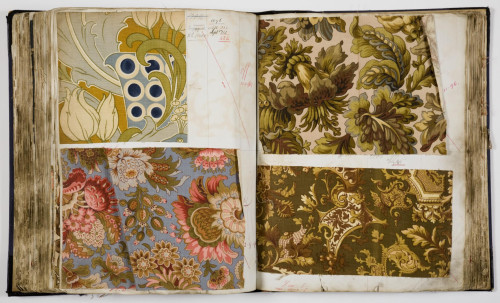
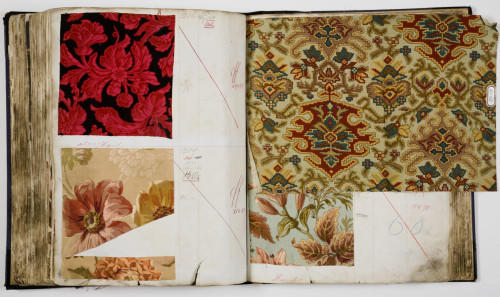
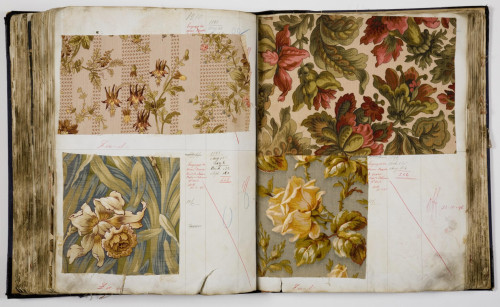
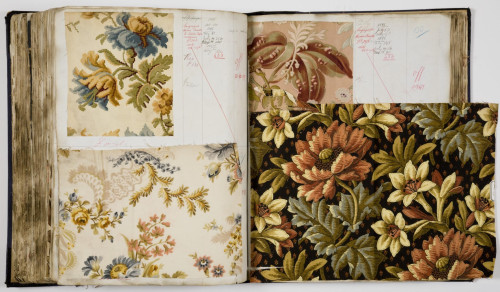
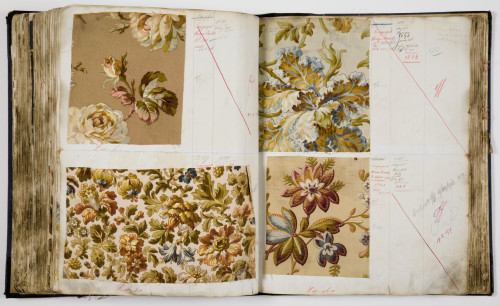
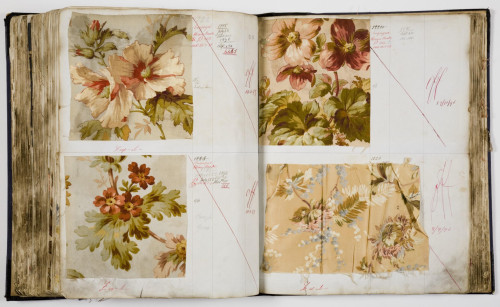
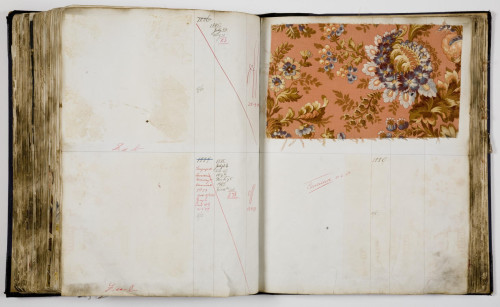
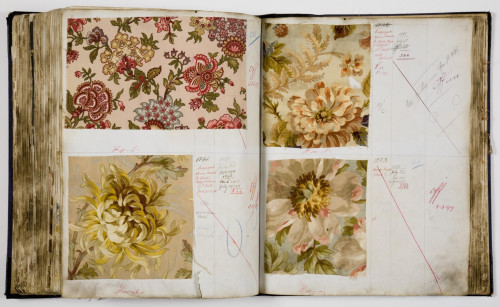
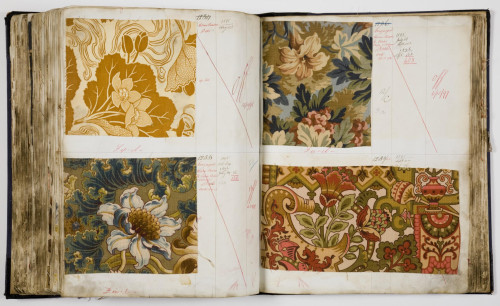
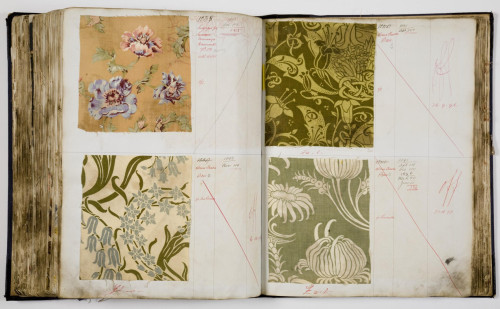
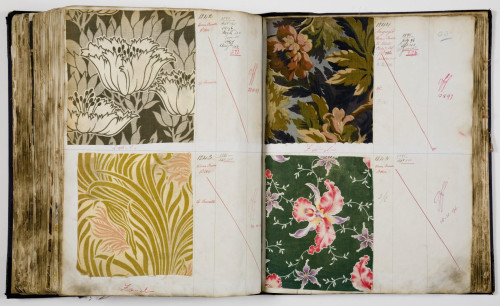
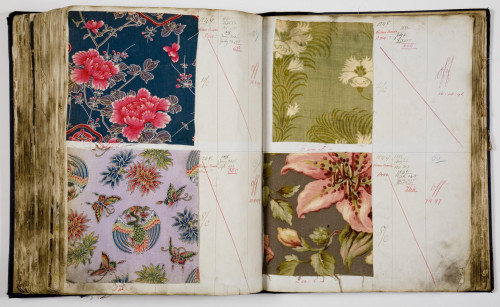
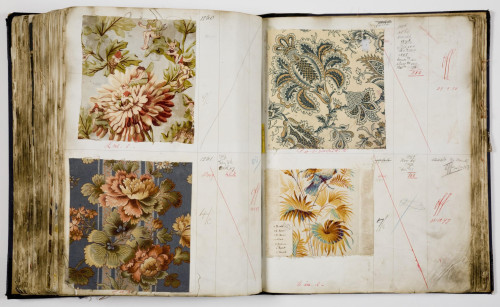
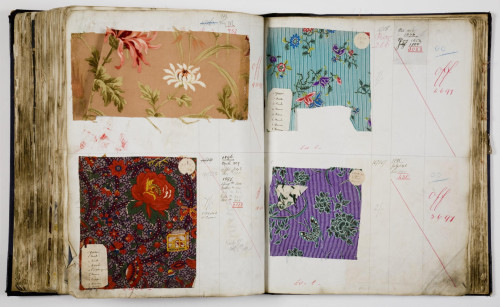
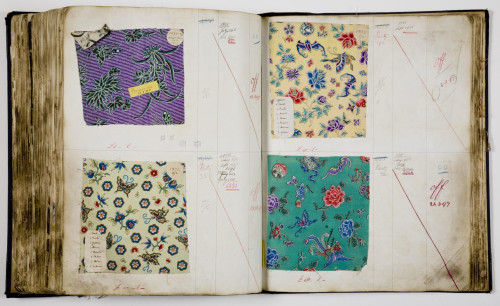
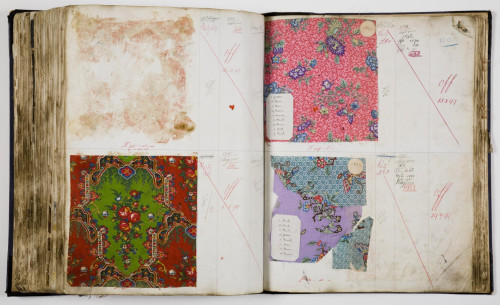
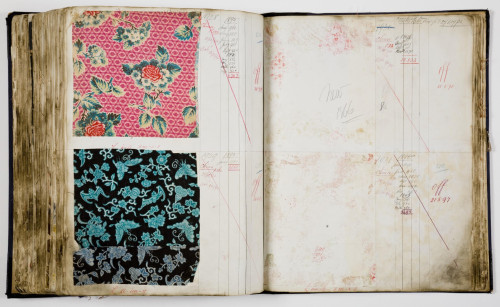
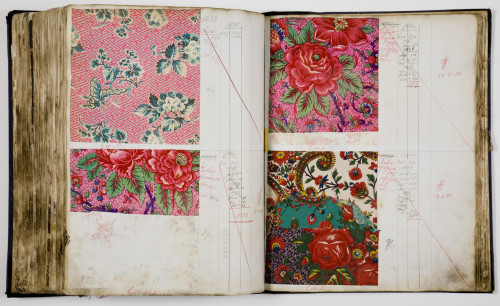
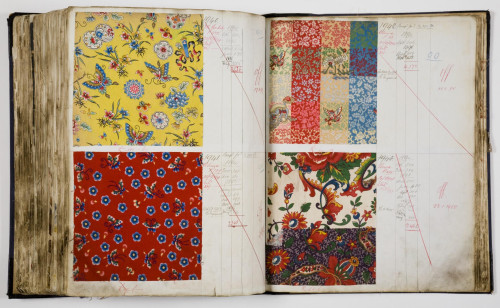
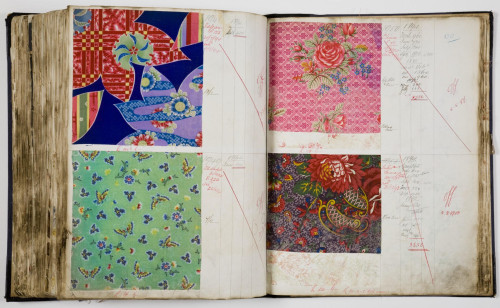
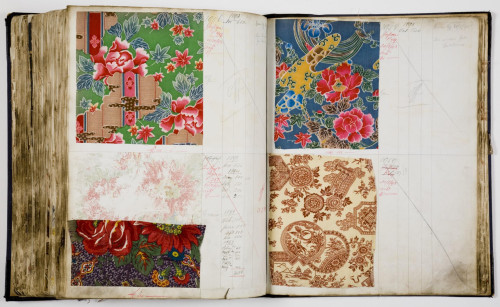
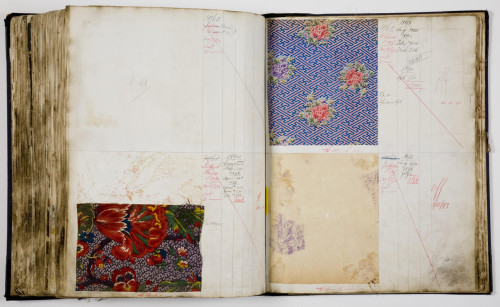
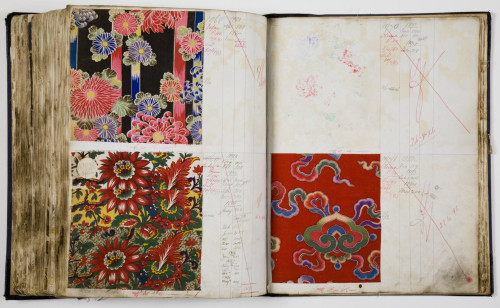
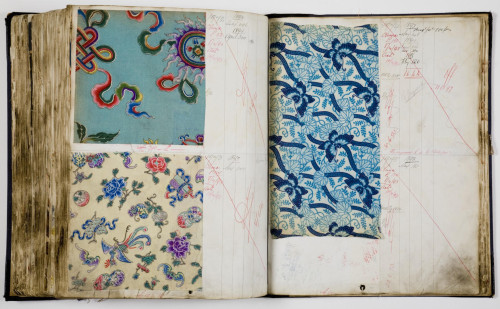
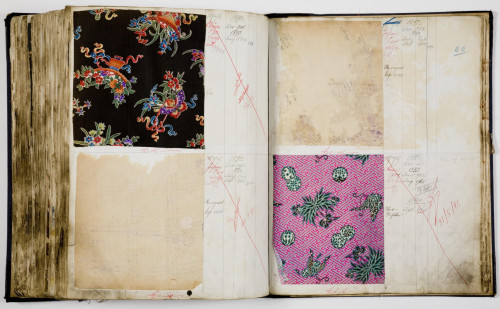
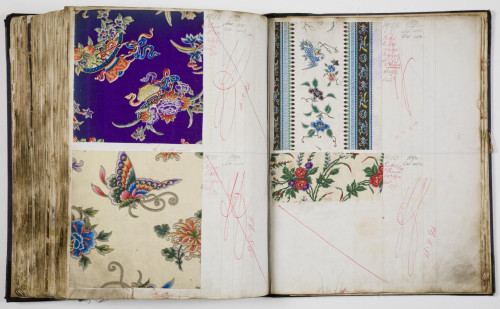
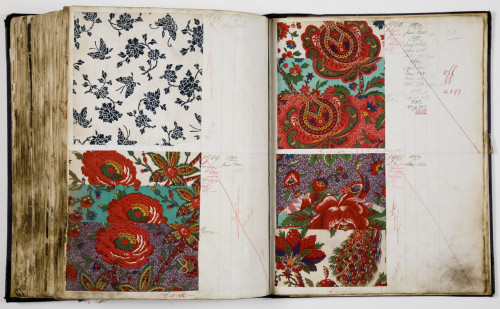
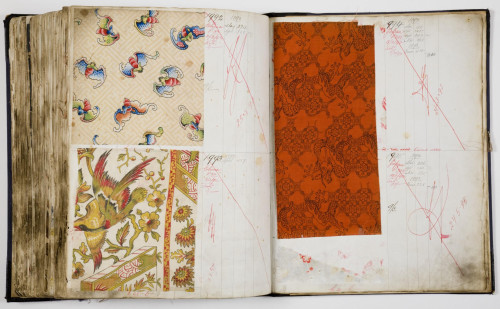
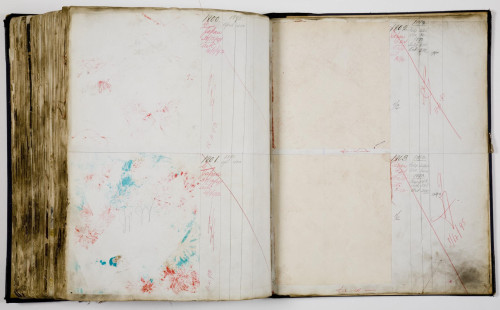
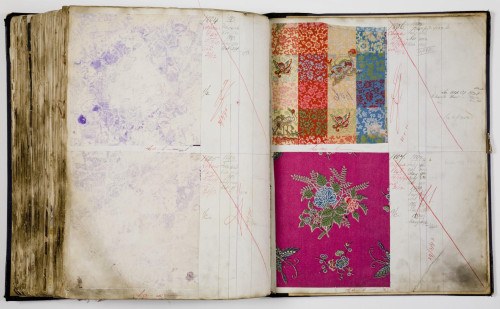
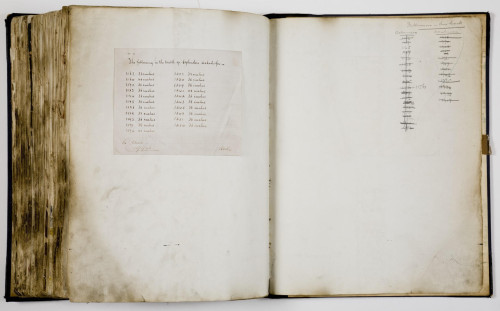
The pages are machine-ruled in brown-black ink to hold two samples to the left with three columns on the right, which are hand-ruled in red ink and purple pencil, dividing it into four columns. Within these columns there are a number of annotations in ink and pencil. For example, pattern number.1028 is annotated, 'Engd [meaning 'engaged'] for Home Trade p.242 (client number), 4/8/91 (date) ackd. (acknowledgement) (discount) Brazil, Chile & Switzerland P 124 (client number) 16/12/92 (date)... '
The left column next to the sample records the pattern number (a four digit number in black ink), the commission/ market (in red ink), the client code (a P number), the date production was engaged and the letters 'ackd', which stands for 'acknowledgments'. It has been suggested that the term 'acknowledgments' might be used to indicate a percentage paid in advance to confirm the engagement of a particular pattern, or it might record a discount or the amount of credit given in recognition of prior business relations. However this term is not regularly used in similar books.
The year and the month are recorded in the second column, above another number, which has been suggested may represent the number of pieces delivered or alternatively produced or sold. A cumulative total for each pattern is also recorded which may be the total number of pieces possibly printed, sold or delivered to the warehouse. The number of colours and rollers used is also recorded (1/c) as well as the number of pad rollers used (which are used to apply an even ground colour). The date at which production was stopped is also recorded (eg. off 3.3.93).
The price is also recorded in a simple code, involving 10 or 11 letters, that stand for numerical digits. Sometimes this sort of code is in the form of a word or phrase that would have been memorable to the user and therefore not written down. It has been suggested that the code used may be the phrase 'LIMA YS PERU' standing for 1234567890 although this suggestion needs to be investigated further.
Dimensions
Width: 37.3cm
Width: 75cm
Website keywords
Label
Book of furnishing textile samples
Made in England, about 1887–1894
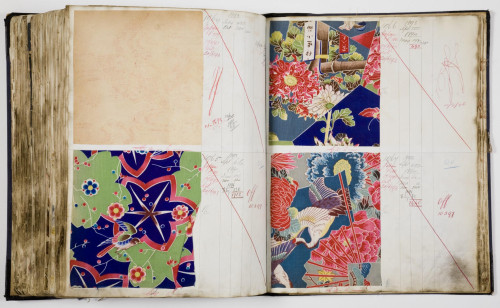
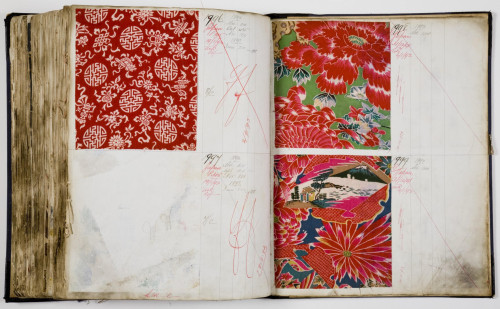
This book, mainly of furnishing fabric samples, was probably put together by an English manufacturer as a record of their designs, with annotated dates and export destinations. These four samples (open at sample numbers 1952 to 1955, page 137-8) show a strong Japanese influence with the mon shapes and chrysanthemum heads – the symbol of Japan’s Emperor.
Label text for a touchscreen computer programme displayed in the exhibition, At Home with the World, Geffrye Museum (20 March 2012- 9 September 2012):
Introduction
Textiles manufacturing, a powerhouse of British industry since the sixteenth century, still dominated the output of British industrial towns in the nineteenth. Britain competed for export sales, so was always looking for quicker and cheaper ways of producing new designs. [This information was displayed alongside a photograph of an opening in this sample book, page 85-86, (object number 86/2000-2), caption 'Pages from a book of furnishing fabric samples, made in England , c.1887-1894.']
Global Connections, Asia, India
British textile design was criticised in the 1880s for decorating flat surfaces with naturalistic images of flowers. The sample at the top left of these pages takes inspiration from Indian chintzes and flattens and stylises its floral pattern. [This information was displayed alongside a photograph of an opening in this sample book, page 107-108, (object number 86/2000-2), caption 'Pages from a book of furnishing fabric samples, made in England , c.1887-1894.']
Global Connections, Asia, Japan
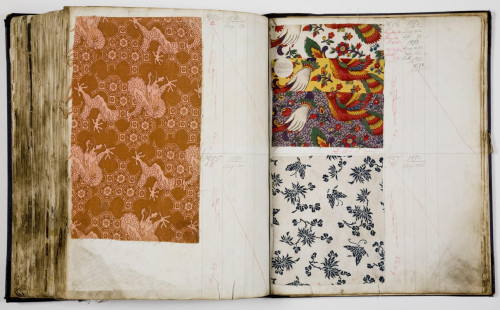
This fabric printed with dragons was designed by Christopher Dresser and sold by Liberty’s. Japanese design strongly influenced British textiles in the 1880s, and Dresser, who visited Japan in 1876-77, was a fervent admirer of all things Japanese. [This information was displayed alongside a photograph of an opening in this sample book, page 153-154, (object number 86/2000-2), caption 'Pages from a book of furnishing fabric samples, made in England , c.1887-1894.']
Dragons often feature in Japanese design. Dresser’s dragon with a snake-like body and bearded grinning face is similar to this one,
embroidered on a Japanese kimono. Dresser has given his dragon four claws though - Japanese dragons always have three. [This information was displayed alongside a photograph of a dragon on a kimono in the Victoria and Albert Museum collection, (object number T.72-1957), caption 'Detail from a kimono, c.1850-1880.']
A full transcript of this information and associated images is available on the object history file.
-
© Museum of the Home, London
-
© Museum of the Home, London
-
© Museum of the Home, London
-
© Museum of the Home, London
-
© Museum of the Home, London
-
© Museum of the Home, London
-
© Museum of the Home, London
-
© Museum of the Home, London
-
© Museum of the Home, London
-
© Museum of the Home, London
-
© Museum of the Home, London
-
© Museum of the Home, London
-
© Museum of the Home, London
-
© Museum of the Home, London
-
© Museum of the Home, London
-
© Museum of the Home, London
-
© Museum of the Home, London
-
© Museum of the Home, London
-
© Museum of the Home, London
-
© Museum of the Home, London
-
© Museum of the Home, London
-
© Museum of the Home, London
-
© Museum of the Home, London
-
© Museum of the Home, London
-
© Museum of the Home, London
-
© Museum of the Home, London
-
© Museum of the Home, London
-
© Museum of the Home, London
-
© Museum of the Home, London
-
© Museum of the Home, London
-
© Museum of the Home, London
-
© Museum of the Home, London
-
© Museum of the Home, London
-
© Museum of the Home, London
-
© Museum of the Home, London
-
© Museum of the Home, London
-
© Museum of the Home, London
-
© Museum of the Home, London
-
© Museum of the Home, London
-
© Museum of the Home, London
-
© Museum of the Home, London
-
© Museum of the Home, London
-
© Museum of the Home, London
-
© Museum of the Home, London
-
© Museum of the Home, London
-
© Museum of the Home, London
-
© Museum of the Home, London
-
© Museum of the Home, London
-
© Museum of the Home, London
-
© Museum of the Home, London
-
© Museum of the Home, London
-
© Museum of the Home, London
-
© Museum of the Home, London
-
© Museum of the Home, London
-
© Museum of the Home, London
-
© Museum of the Home, London
-
© Museum of the Home, London
-
© Museum of the Home, London
-
© Museum of the Home, London
-
© Museum of the Home, London
-
© Museum of the Home, London
-
© Museum of the Home, London
-
© Museum of the Home, London
-
© Museum of the Home, London
-
© Museum of the Home, London
-
© Museum of the Home, London
-
© Museum of the Home, London
-
© Museum of the Home, London
-
© Museum of the Home, London
-
© Museum of the Home, London
-
© Museum of the Home, London
-
© Museum of the Home, London
-
© Museum of the Home, London
-
© Museum of the Home, London
-
© Museum of the Home, London
-
© Museum of the Home, London
-
© Museum of the Home, London
-
© Museum of the Home, London
-
© Museum of the Home, London
-
© Museum of the Home, London
-
© Museum of the Home, London
-
© Museum of the Home, London
-
© Museum of the Home, London
-
© Museum of the Home, London
-
© Museum of the Home, London
-
© Museum of the Home, London
-
© Museum of the Home, London
-
© Museum of the Home, London
-
© Museum of the Home, London
-
© Museum of the Home, London
-
© Museum of the Home, London
-
© Museum of the Home, London
-
© Museum of the Home, London
-
© Museum of the Home, London


