36/1993-1
Collection
Furniture
Brief description
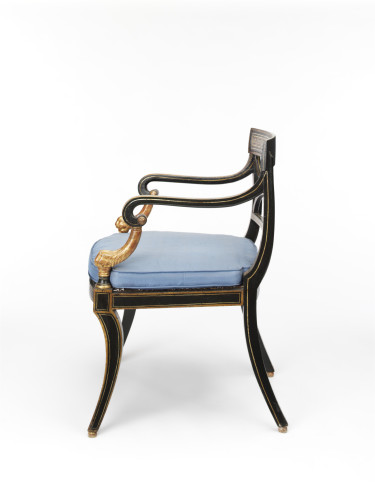
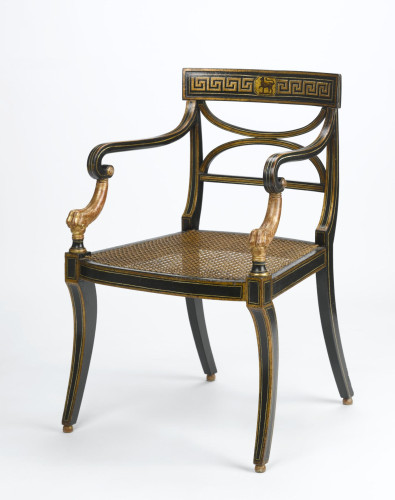
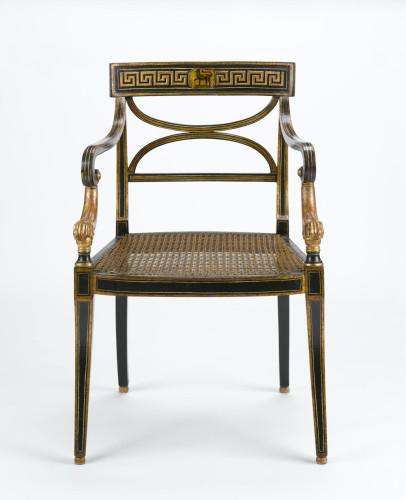
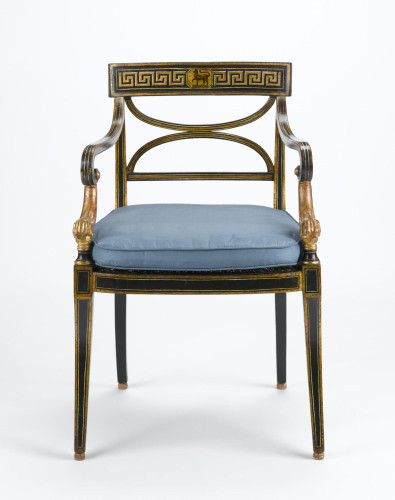
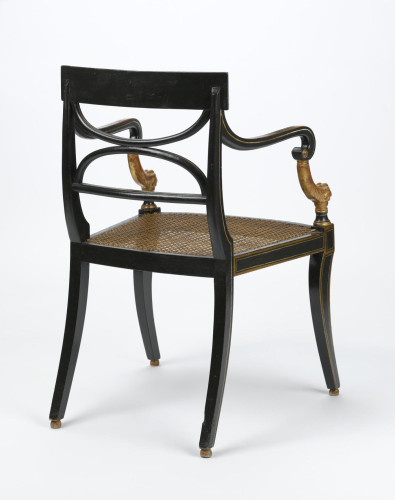
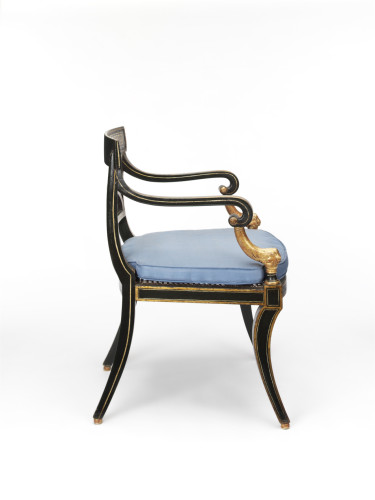
Armchair made from beech, painted and gilded with a carved lion's paw detail on the arms and a cane seat, with a replica silk squab cushion, probably manufactured in England in c.1810.
Object name
chair
armchair
armchair
Object number
36/1993-1
Location
On Display
Production date
c.1810 (manufactured)
Production place
England (manufactured)
Period
Georgian (1714-1837)
Material
beech
cane
gilt
silk
cane
gilt
silk
Technique
carved
joined
gilded
caned
painted
joined
gilded
caned
painted
Physical description
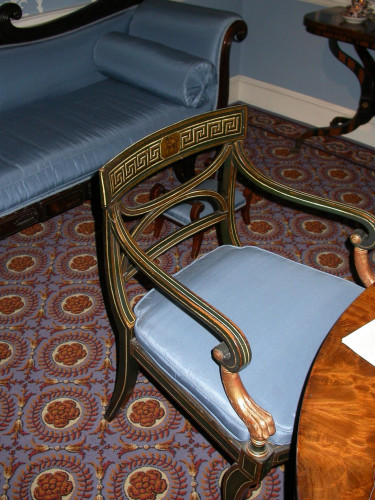
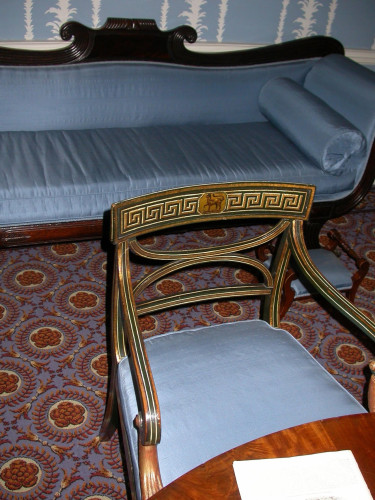
Green painted and gilt beech elbow chair with a top rail painted with a classical key pattern and a classical beast centred on a gilt tablet. The chair has scrolled arms on carved and gilt paw supports and a cane seat with a bowed front rail raised on sabre legs with small turned feet. The chair has a replica silk squab cushion.
Dimensions
Height: 84cm
Width: 54.5cm
Depth: 51.5cm
Width: 54.5cm
Depth: 51.5cm
Website keywords
seating
Label
Label text, Geffrye Museum, date unknown:
Armchair, painted and gilded beech, with caned seat and scroll arms ending in carved and gilded claws, c1815, with modern silk squab cushion.
Label text for the exhibition At Home with the World, Geffrye Museum (20 March 2012- 9 September 2012):
Armchair
A ‘Greek key’ pattern – lines turning at right angles to one another forming a border – is painted along the top of this classically-influenced chair. It is a pattern that was widely used on Ancient Greek architecture, and is more properly known as a meander – the name comes from the winding river Maeander in Turkey.
Armchair, painted and gilded beech, with caned seat and scroll arms ending in carved and gilded claws, c1815, with modern silk squab cushion.
Label text for the exhibition At Home with the World, Geffrye Museum (20 March 2012- 9 September 2012):
Armchair
A ‘Greek key’ pattern – lines turning at right angles to one another forming a border – is painted along the top of this classically-influenced chair. It is a pattern that was widely used on Ancient Greek architecture, and is more properly known as a meander – the name comes from the winding river Maeander in Turkey.
-
© Museum of the Home, London
-
© Museum of the Home, London
-
© Museum of the Home, London
-
© Museum of the Home, London
-
-
-
-